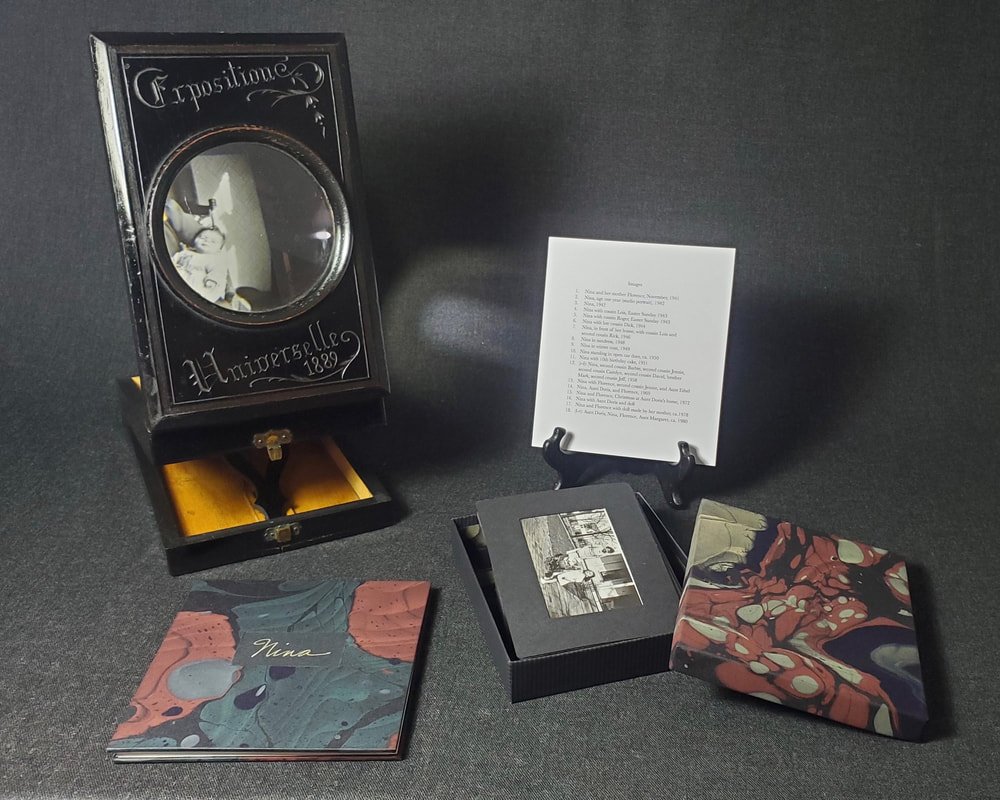
Jennifer Evans Kinsley Spotlight
Jennifer Evans Kinsley
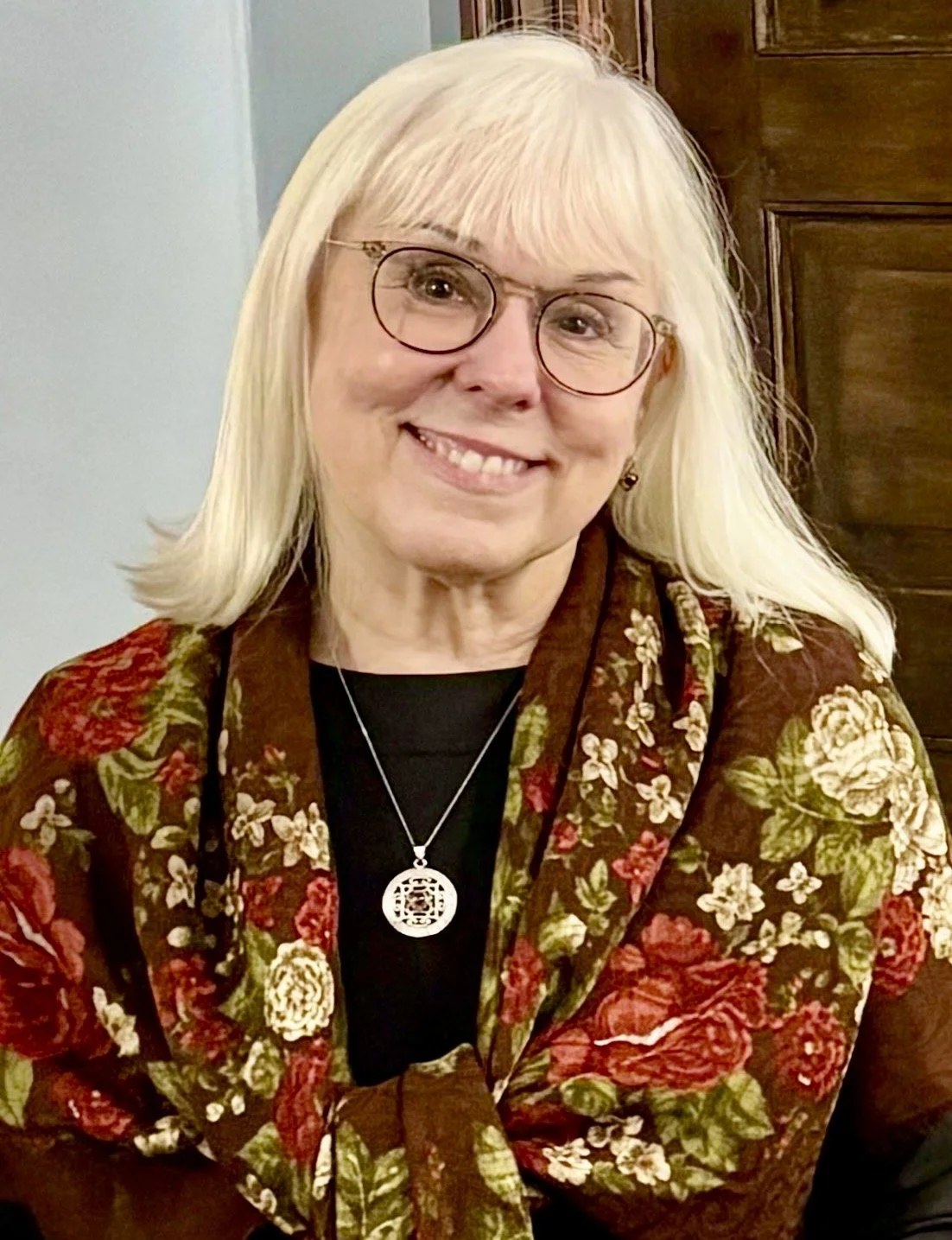
Interviewed by Mark Moore, April, 2026
After completing undergraduate studies in Special Education and Visual Arts studio, Jennifer taught visual arts for developmentally delayed children and young adults. Soon thereafter, she received a graduate assistantship to complete graduate studies in OSU’s Logan Elm Press. During her graduate studies, Jennifer, her mentor Doug Blandy, and Logan Elm Press director Robert Tauber worked with a team of disabled students to create a book from start to finish utilizing Bliss Symbols. The goal was to make poetry accessible to severely disabled non-verbal children and adults who used Bliss Symbols for the purpose of communication (see note below). The team contacted a poet named Clifford Burke to compose an original poem in Bliss Symbols. With assistance and instruction by the educational team, the four students (Fanny, Sally, Michael, and Richard) beat fibers, produced the paper, set the moveable type, carved the relief print imagery, operated the presses, and printed and bound the limited edition of this poetry chapbook. The project’s underlying goal was to test to what degree various pedagogical techniques employed by the Arts and Crafts Guilds of Medieval and Renaissance Europe were applicable methods to contemporary art education. Jennifer’s experience at Logan Elm Press opened the world of book-making.
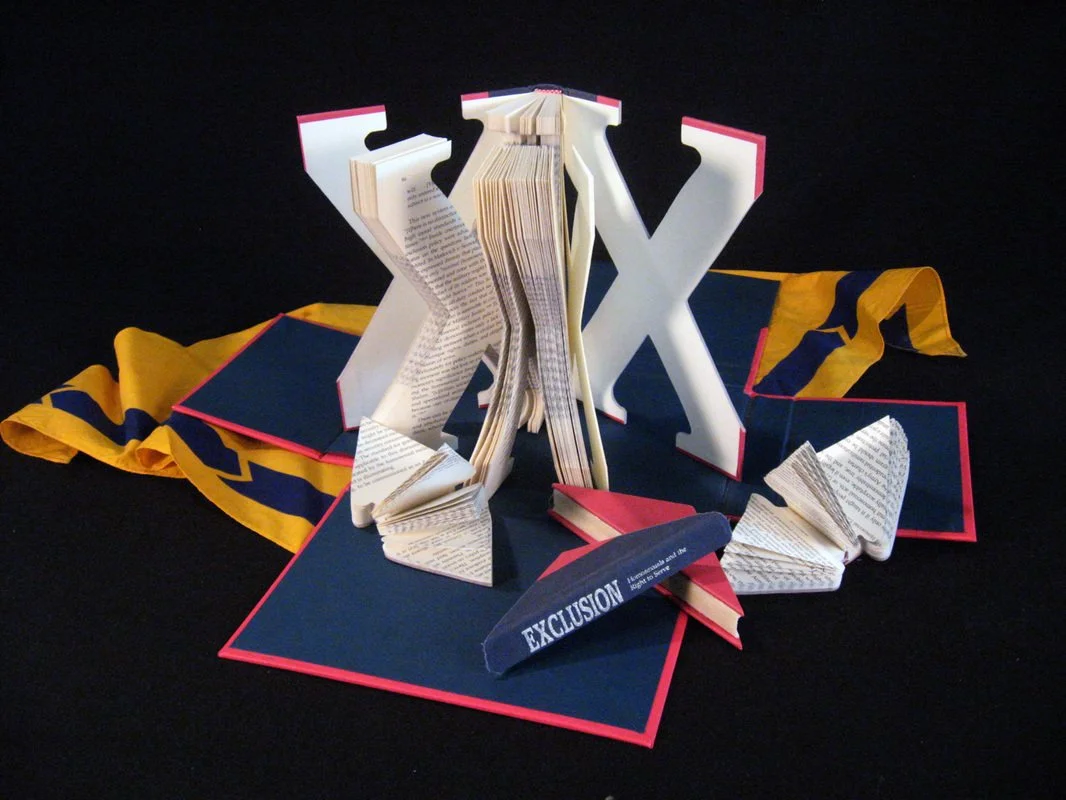
As a young girl Jennifer Evans Kinsley was surrounded by women creatives and makers. Her mother, grandmother, and great aunts introduced her to a myriad of skills such as sewing, quilting, weaving, crocheting, knitting, working with textiles, appliqué, and painting. “I took quite a labyrinthian route to where I am now. I studied watercolor, painting and printmaking. I explored weaving, ceramics, surface design and calligraphy.
Jennifer was the first generation of her family to attend college. Her parents, not having experienced college themselves, were unconvinced that a career in the arts would be of benefit to a woman. They offered financial support provided it consisted of studies in education or nursing training. She decided to study education courses with a minor in art. Looking back, if Jennifer had known herself better, she would have said “No, that's not what I want. I'll put myself through art school by myself. Thank you.”
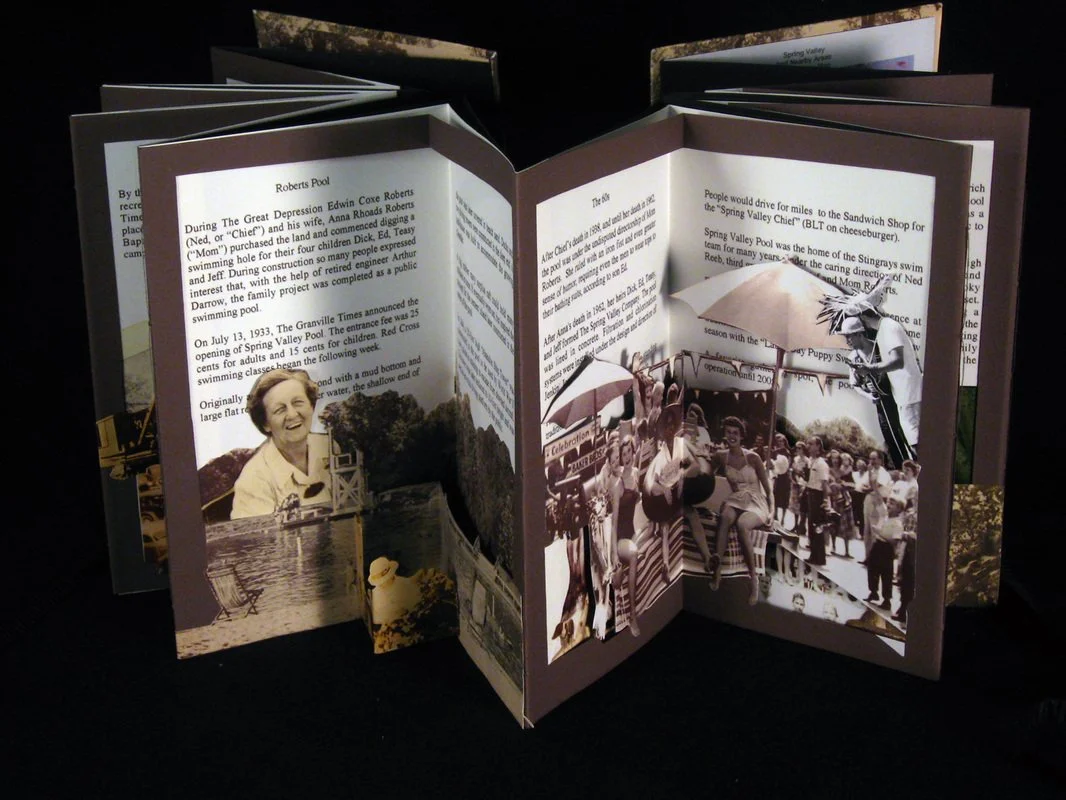
“It was such a treasure trove! “It was here in the hand papermaking, letterpress and book binding laboratory that I discovered my focus. I suddenly realized that the art book was a vessel that could easily employ and contain my imagery, marks, text, calligraphy, surface decoration and fiber arts. As a direct result of my work with my wonderful mentors at the Logan Elm Press I fell completely in love with the book as an art form.”
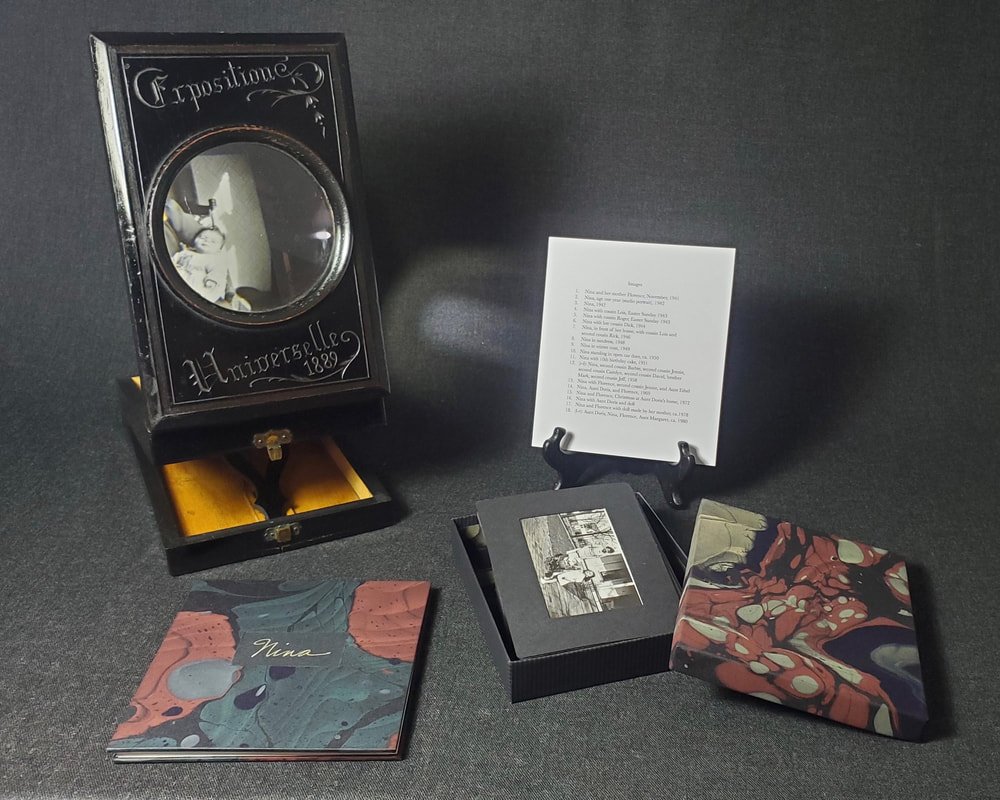
Jennifer is informed and heavily influenced by the writings of Lewis Hyde, primarily his book, THE GIFT- HOW THE CREATIVE SPIRIT TRANSFORMS THE WORLD. Hyde presents the notion of the artist and process of art-making as being heavily endowed and driven by the gift, which places artists art-making in the realm of gift economy, as opposed to commodity economy present in capitalistic society.
“None of us ever does anything all by ourself. There's always help. Your many encounters, events, achievements, and even accidents have brought you to this place where you can create and offer your work to others.”
In her book works Jennifer aspires to make a connection with and invite the viewer to engage with a narrative, concept, or message that is compelling by its own merit.
“As for me, the most important and powerful purpose of art is to create connections. Art-making is essential due to its ability to make connections between other persons, ideas, and beliefs. Art can be the connector we seek.This is especially relevant and greatly needed now, during the challenging, frightening and often discouraging times in which we live today.”
More information about Jennifer and her book art objects can be found at JenniferEvansKinsley@weebly.com
note: “...graphical symbols used primarily as Augmentative and Alternative Communication (AAC) for individuals with speech or physical impairments”.https://www.blissymbolics.org/index.php/why-is-bliss-used.)