Micaela Vivero Spotlight
Micaela Vivero Spotlight
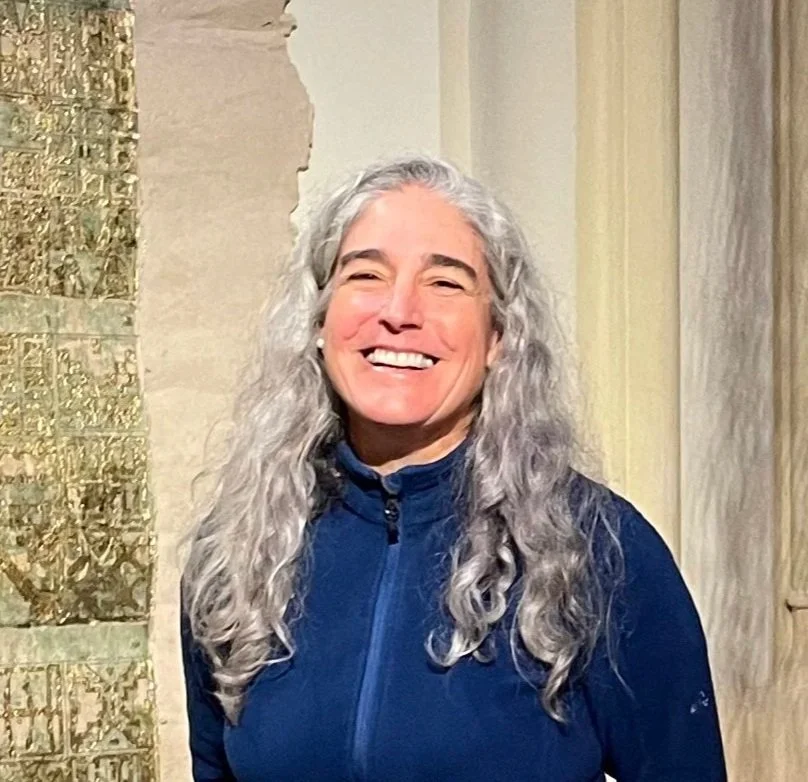
Micaela Vivero has been living in Licking County for 21 years.
As an artist living in the United States of America with family roots in Ecuador and Germany, Vivero has no shortage of inspiration in her life. And she’s practicing her inspired art right here in Granville, Ohio.
Vivero is a sculpture and mixed media artist who focuses on large-scale installation art. She finds special interest in soft materials and aims to engage with viewers. Put simply, she says, “To discover how I can communicate through art and what all those discourses might hold has been a very interesting journey.”
For Vivero, this journey began to take hold halfway through college. She came into college studying biology, taking after her pediatrician mother and engineer father. “Science is what they thought their children had to choose for education,” she explained.
Though she did have an interest in biology and environmental science, she began to really fall in love with art during this time. “I set foot in an art class in college, and I was committed” Vivero remembers. “I liked art in high school, but it was never considered a career path…But after a year and a half in college, I decided that [art] was what I wanted to do.”
Written by Grace Lukens, December 2025
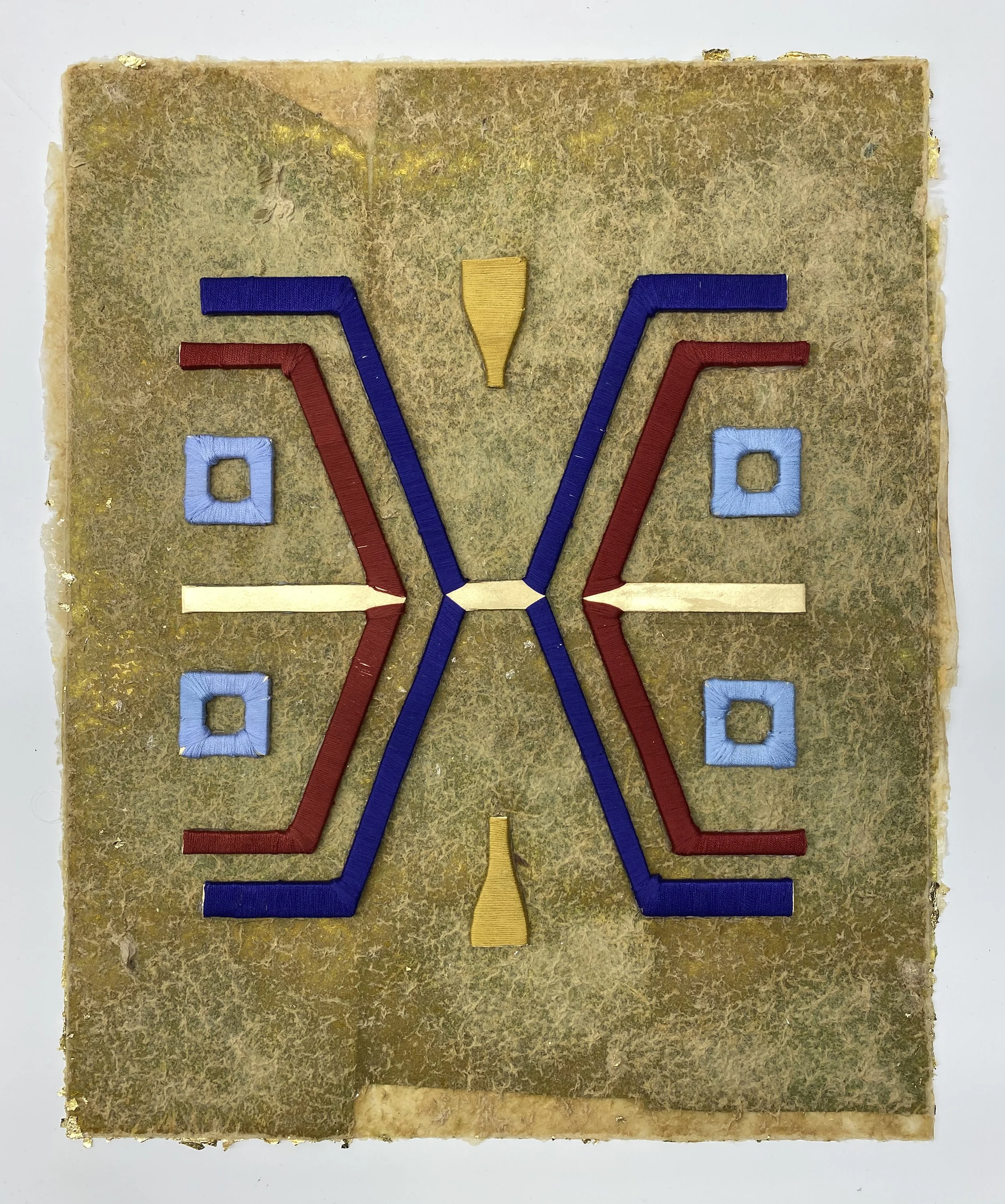
Vivero, Micaela, Tocapu, hand-made paper, gold leaf and cotton thread, 20’’ x 16’’, 2005.
Since then, she hasn’t looked back, earning her BA in Fine Arts from Universidad San Francisco de Quito in Ecuador and an MFA in Sculpture from Alfred University in New York. Now, she teaches in Denison University’s Visual Arts Department, helping cultivate a love of art in students right here in Licking County.
Vivero’s career has been an illustrious one. Her works have been shown in over ten different countries, including the U.S., Colombia, Spain, Armenia, and more. She boasts artist-in-residence positions from multiple museums and organizations. Just recently, she received a Fulbright Grant—a highly prestigious award—to fund a year at Universidad de Murcia, Spain. Her time in Spain was spent visiting historical sites, teaching students at the university about European colonization and pre-colonization traditional art forms, and in her studio making art.
The time she has spent away has allowed her to continue developing her art and she has learned a lot about the world, people, and herself.
“The change of context and environment highlights your senses as a human being, and you’re able to see other things in other places that are new to you that you cannot see at home.”
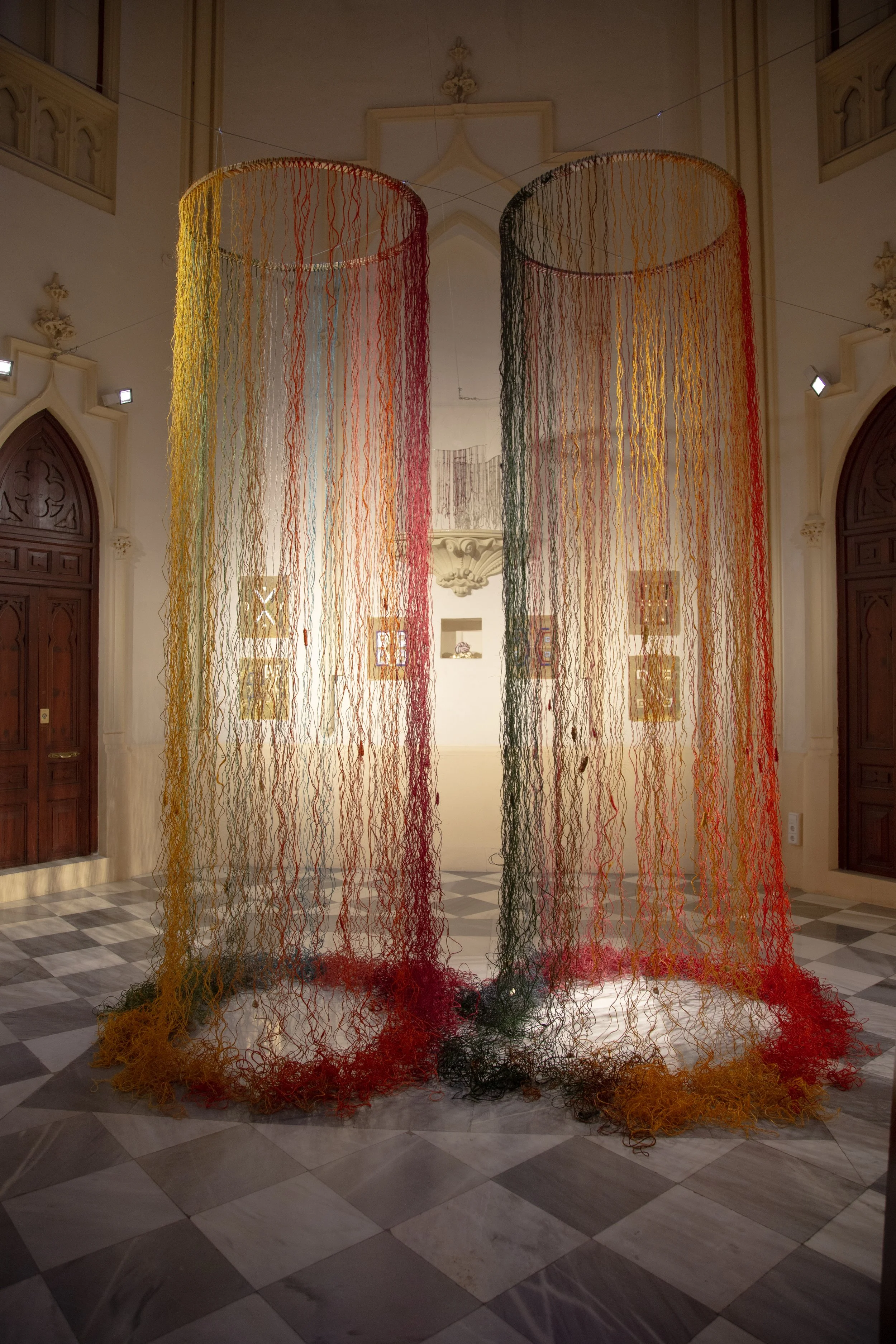
Vivero, Micaela, Khipus, Wood and dyed sisal, 15’ high, site-specific installation, 2025.
Between teaching, showing, and traveling, it seems almost impossible that Vivero’s busy schedule would allow her to make art regularly. The trick, she says, is not to let your practice come last.
“There are so many demands to our time, to our attention…” she acknowledges, “and sometimes it seems that we leave art making as the last activity of the day. Sometimes you don’t get to it in a day, a week, a month, and then it’s harder to get back to it.”
Vivero articulates clearly how she engages with art and starts a project. She says that she can start with either an engagement with materials or engagement with an idea or concept.
Being interested in a material or technique prompts an exploration of how that specific material or method can be used. “Sometimes making mistakes [with the material], making things that are interesting, prompts an engagement that is playful and experimental.”
Her other favorite way of making begins with an idea.
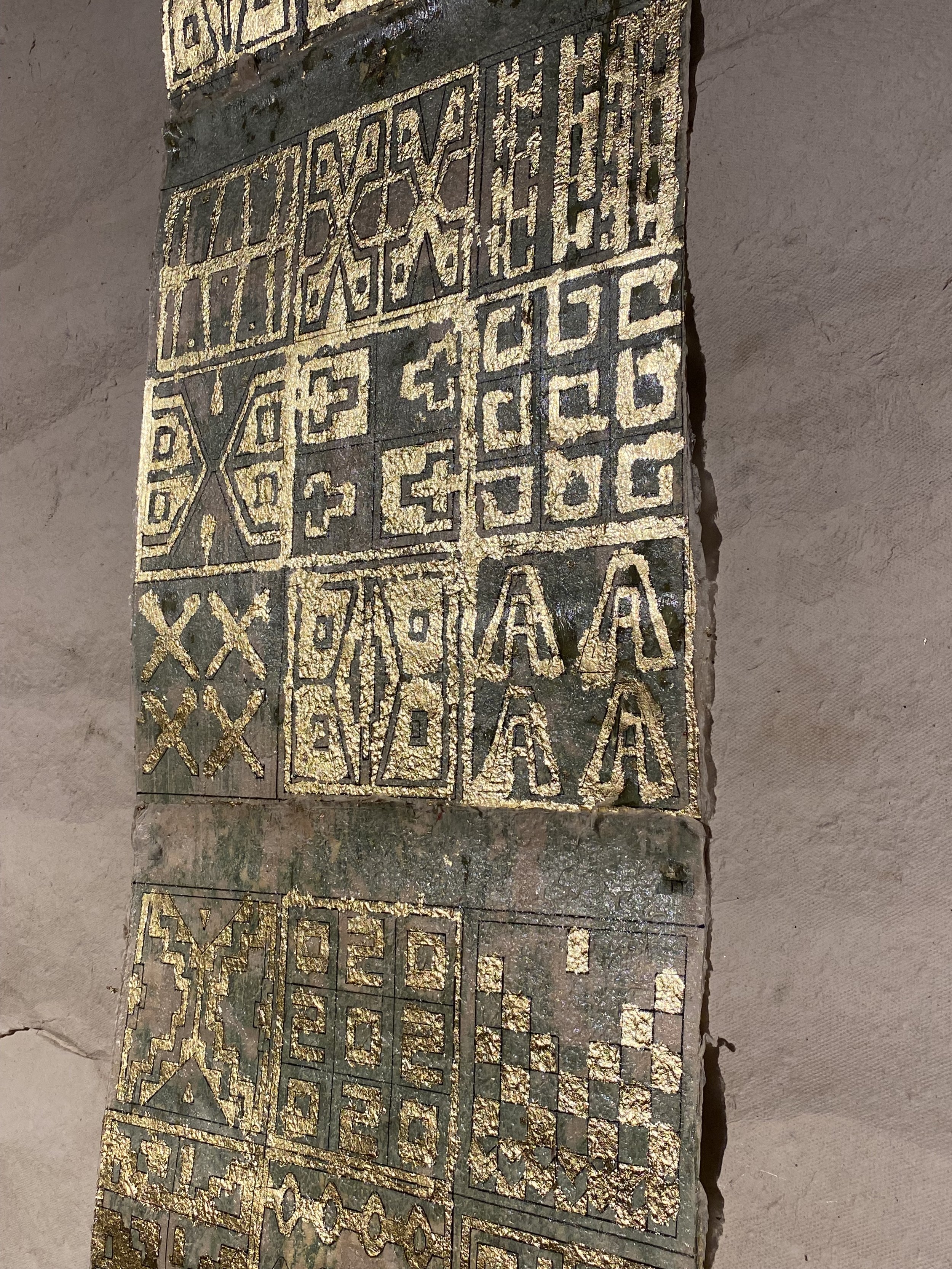
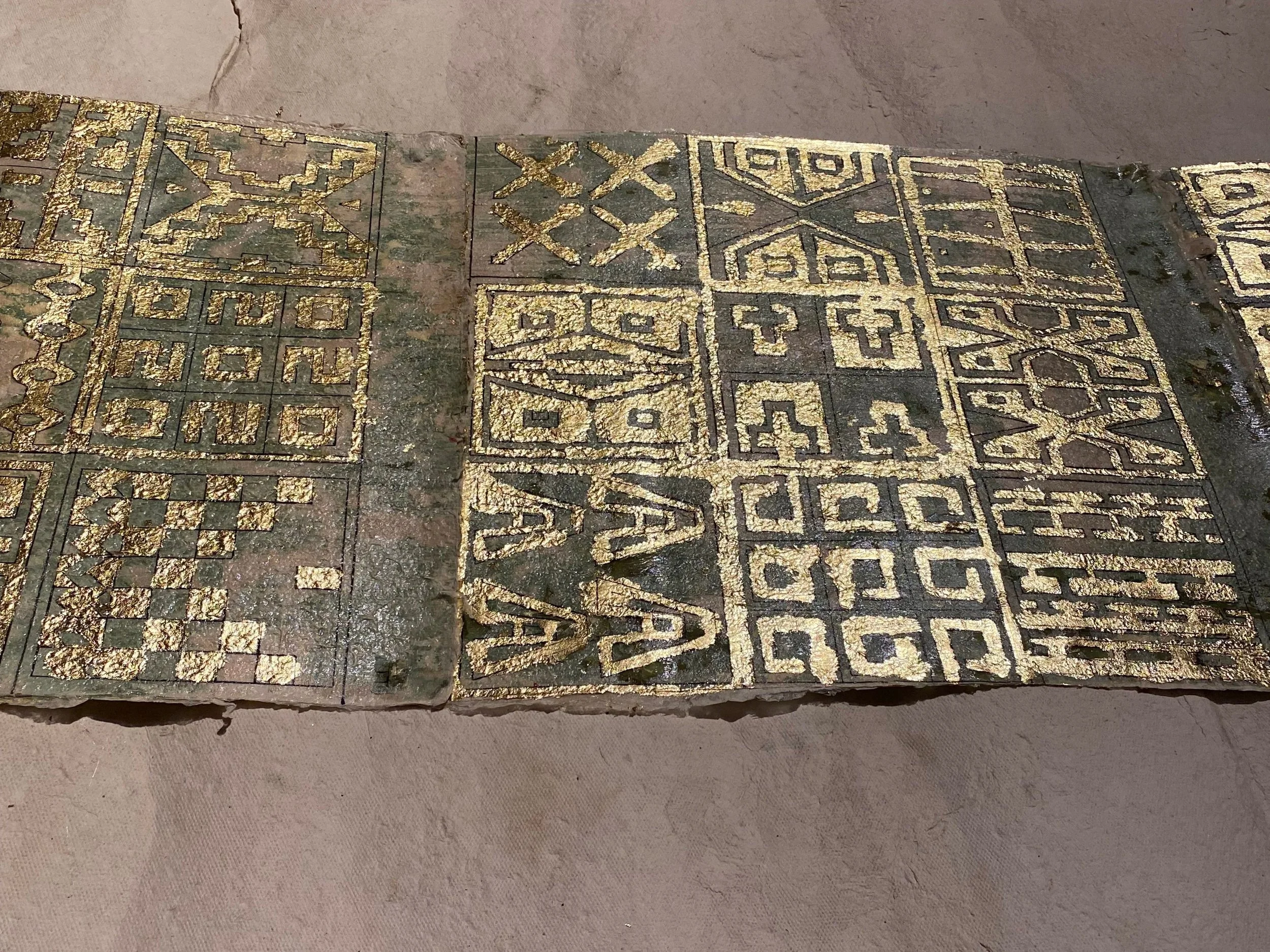
Vivero, Micaela, Tocapus (detail), hand-made paper and gold leaf, 112’’ x 36’’, site-specific installation, 2005.
“I begin to think about, 'What way would I be able to share enough information with my viewers in order for them to be engaged with this most effectively?’”’
For example, Vivero has recently been researching the imagery and practices used by original people of South America, where she grew up. “I have been acquiring more knowledge of the cultures that existed and still exist there, and then also what kind of art they used to practice.” The practice of recreating an idea through traditional methods gives her what she calls “a limitless source of inspiration of shapes, colors, ways of making.”
She warns against copying other art, however, as imitation rather than inspiration is ineffective. “Art comes from ideas, but then the art needs to have the freedom to develop into its own solutions.”
This freedom, and her abilities to play and to learn, have been instrumental in Vivero’s career.
“Experimentation and communication through art have been the biggest attractions for me to continue making art. And as I have deepened my knowledge in art and different materials and practices, to get better at them now plays an important role in my practice.”
Though she has spent much time away from Granville recently, she still has a strong love for the local arts scene. In fact, being away has given her perspective on what the county might need to grow: spaces for artists to thrive.
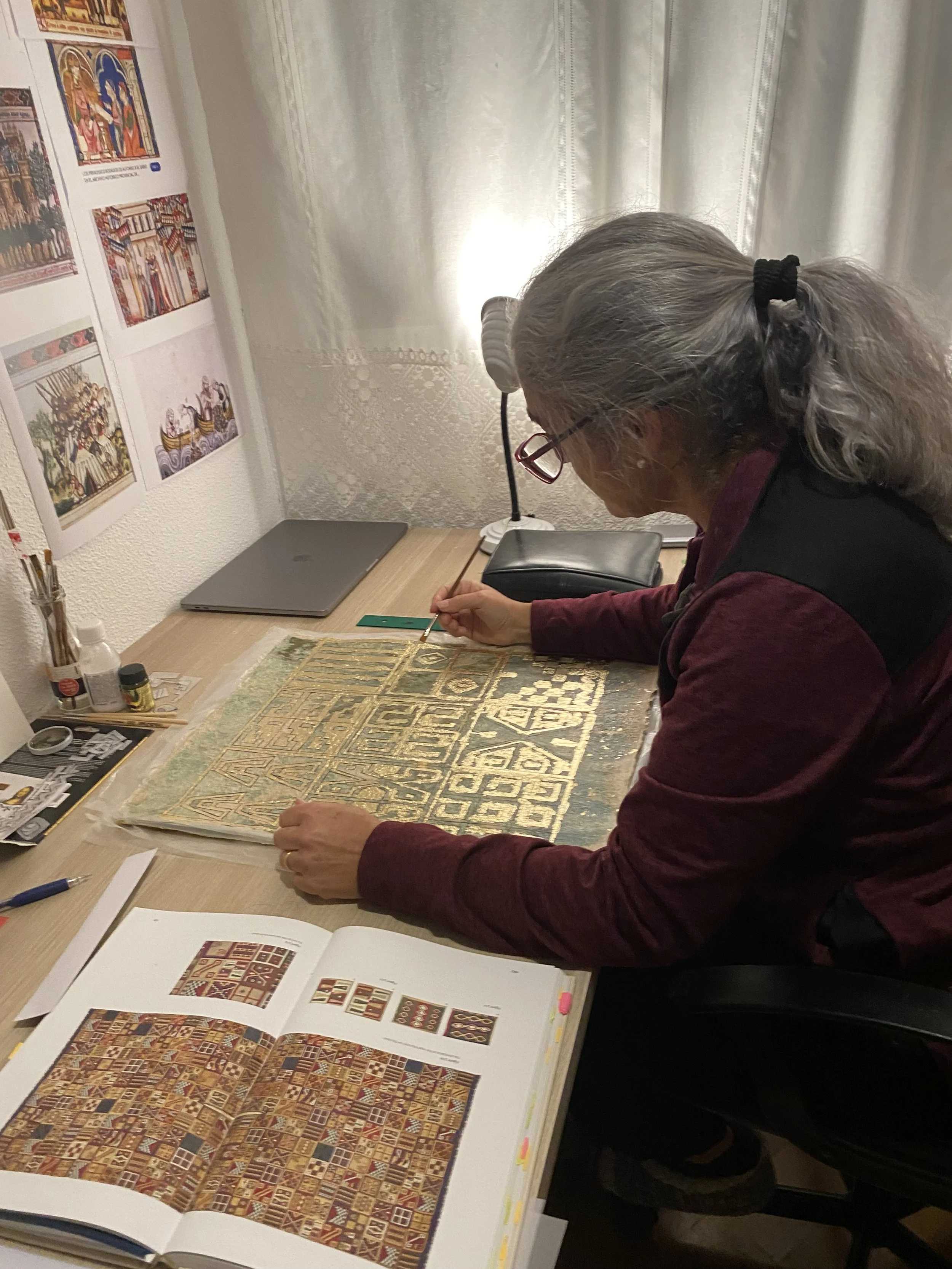
Vivero, Micaela, image in studio.
“I think that maybe what we lack the most is having physical spaces that support artists in Licking County,” Vivero says simply.
“Giving a voice to artists, highlighting artists, allowing their voice to be heard and their art to be seen in a space– physical or digital– it’s all valid and so needed.”
After spending the summer in Germany, Vivero will return to Denison in the fall of 2025 to resume teaching sculpture and mixed media art to students. Though she will be back in Licking County, it is clear that all the work she’s done away will help her create right here at home.