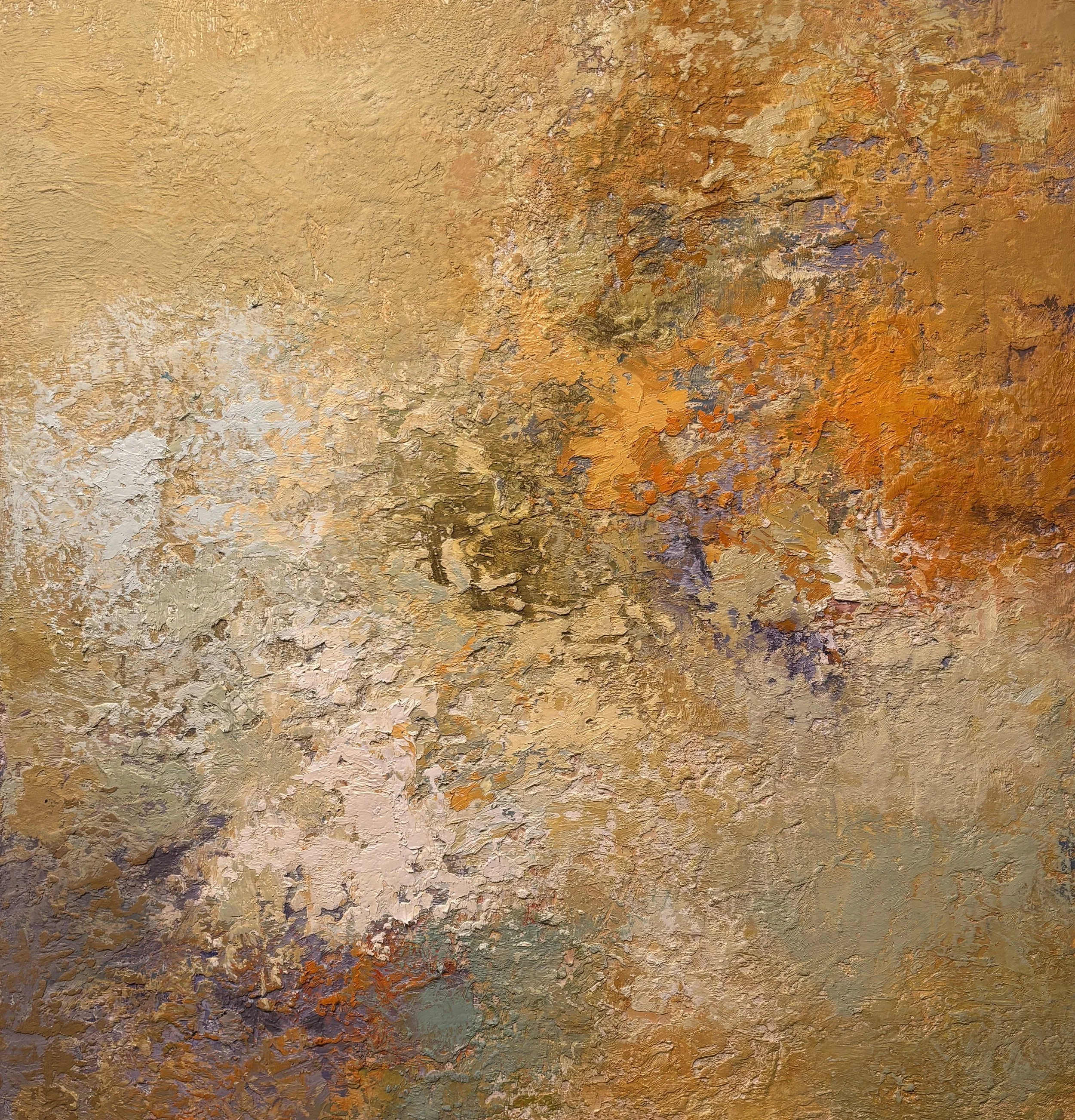
Karin Dahl Spotlight
Karin Dahl

Written by Sage Szucs, June, 2026
An emeritus professor from the Ohio State University, Karin Dahl is an abstract artist who draws inspiration from her academic work in emergent literacy.1 Even though art has held a place in her life for a while, she did not really start her journey as an artist until her retirement.
“I would sit and doodle in meetings at OSU. I would walk past the art building, and I would think, ‘Should I go in there?’ But I was so busy, I didn't… but I had been observing art, going to art exhibits, and being a consumer of art as an adult.”
Retirement, though, functioned as a springboard for her to leap into her artistic career. She hired a private tutor to teach her the fundamentals of color theory and technique, and went through eight years of lectures and note-taking. Karin has now been painting for twenty years.
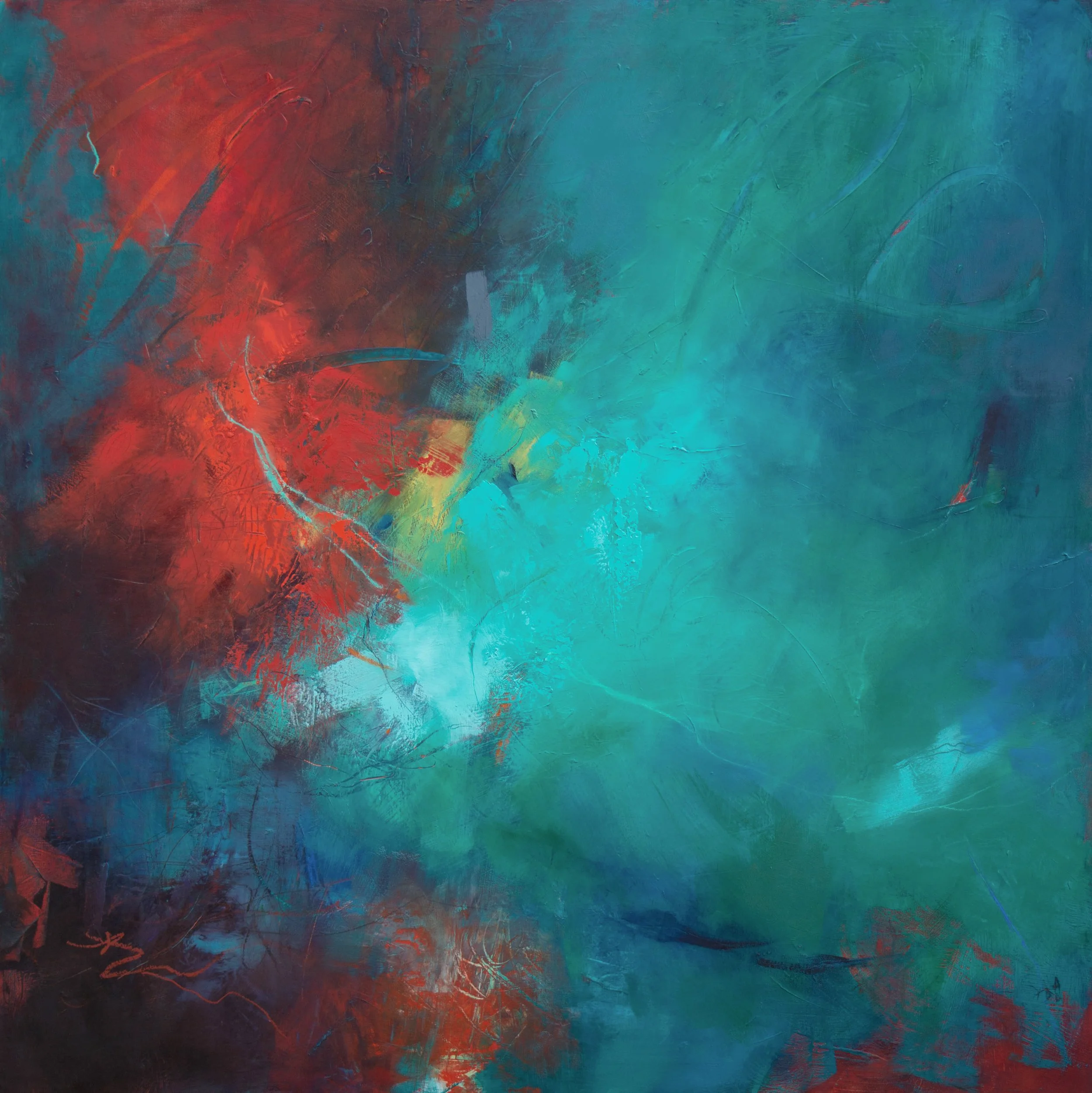
Her background in academia serves as a distinctive feature in her work, influenced by the energetic shapes and markings created by young children in her studies.
“As a scholar, I used to interview five-year-olds entering kindergarten about written language. I would say, ‘Here's a piece of paper. You [can] write whatever you want.’ And of course a five-year-old doesn't know letters, and so what the five-year-olds would do is make these incredible inventive shapes…with great gusto. They didn't say, ‘Oh, I don't know how to do it.’ They said, ‘Okay, just a minute,’ and then filled out the whole piece of paper. And so, having observed that over and over and over, I thought, ‘Here I am in a studio. I can take that same enthusiasm and gusto and go after the business of abstract art.’ I don't have a picture to copy; I'm inventing as I go just like the kids.”
An image of these exact drawings is blown up and hung on one of the walls in her studio for inspiration. Leaned against another wall was a large, newly finished commission. Karin explained that she loves to paint big because of how much she can say in just one piece.
“The thing that fascinates me–and this is the childish part of me–is how does the meaning get in there? There is meaning. It's very clear that there's meaning there, and as an artist, I really think about that. What is it that I'm doing that puts meaning in my paintings when they're non-representational? I'm really fascinated with the semiotic part of art. And it's not necessarily recognizable symbols, that is, I'm not putting plus signs or hearts, so it's meaning encoded in arrangements of color. That's what the deal is about, and that is just endlessly fascinating to me.”
She also loves to experiment with different cross-genre elements in her work, stating that, “I really believe that the arts, when they fuse, produce something new. So two plus two is five.” In a show she did at the Cultural Arts Center, she collaborated with jazz musicians by sending them an image of one of her paintings to which they would compose a piece of music, record it, and send it back to her. After a couple rounds of this process, they then flipped the script and Karin would create a painting inspired by one of the jazz pieces she was provided. In another show titled “How Does Color Sound,” she did something similar, but this time with multiple different groups of musicians from a wide variety of genres. They each composed a piece based on a chosen color.
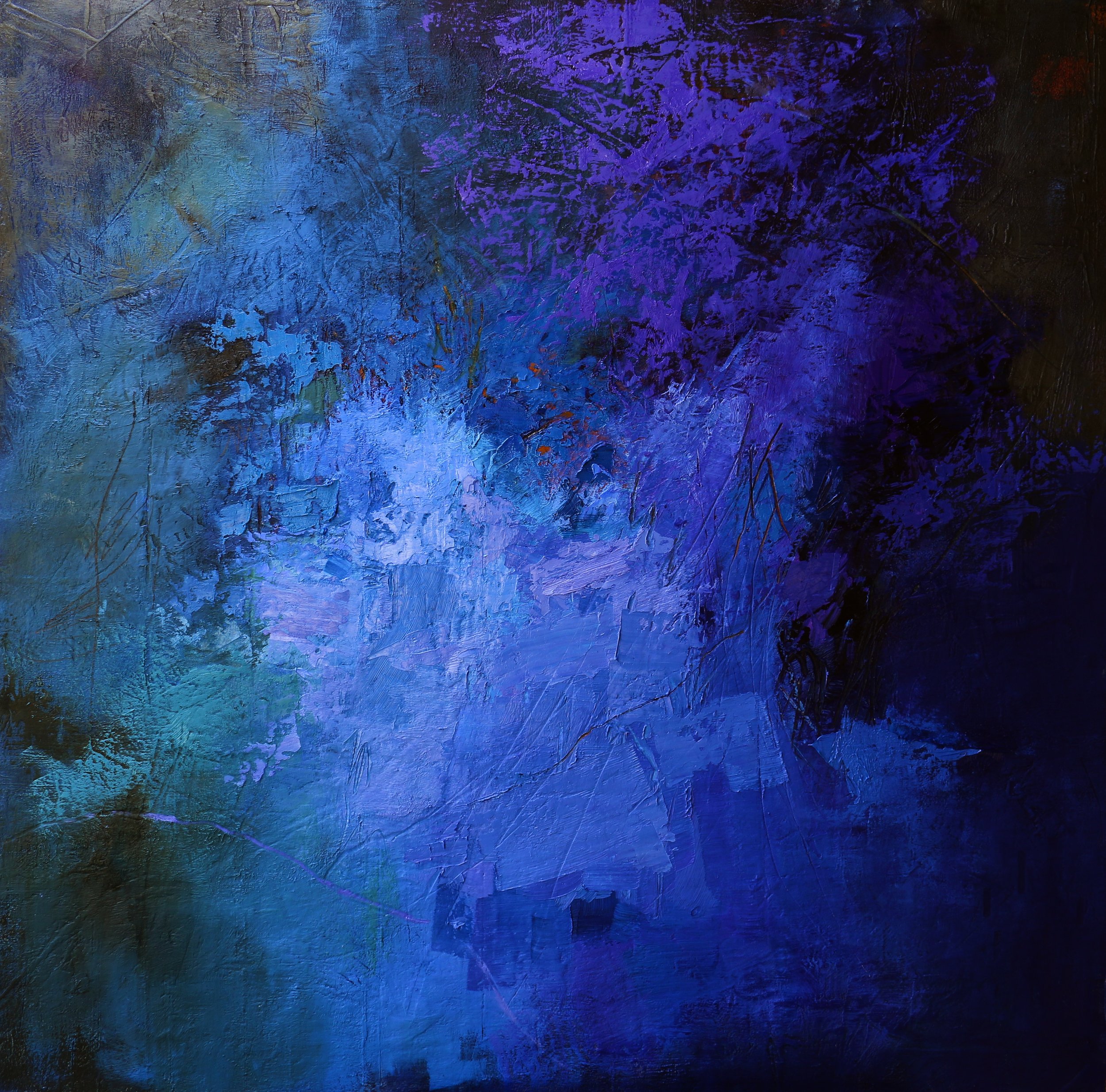
“So the core of cross-genre work–that two plus two is five–is to discover what's new that comes from that combination. It isn't just one plus the other one, it is what's new, and it's very interesting to experience.”
Further exploring this cross-genre experience, Karin is currently working on a show that will feature her art with literary responses instead of music. In these literary responses, a character based on each painting is introduced, written, and explained by the author.
“The spooky part is that each character has a part of their characterization that is something that was going on inside of me when I was doing the painting, and it's happened over and over and over.”
Creating art is Karin’s outlet for more than just creativity; it is an outlet for her soul. When she paints, she is throwing her emotions and thoughts onto the canvas to get them out of her head and share them with an audience.
“I think art helps to inspire, lift, summarize…so art is important in terms of what it does for the soul of the producer.”
1 a child-initiated exploration of reading and writing processes and skills prior to formal school instruction.